


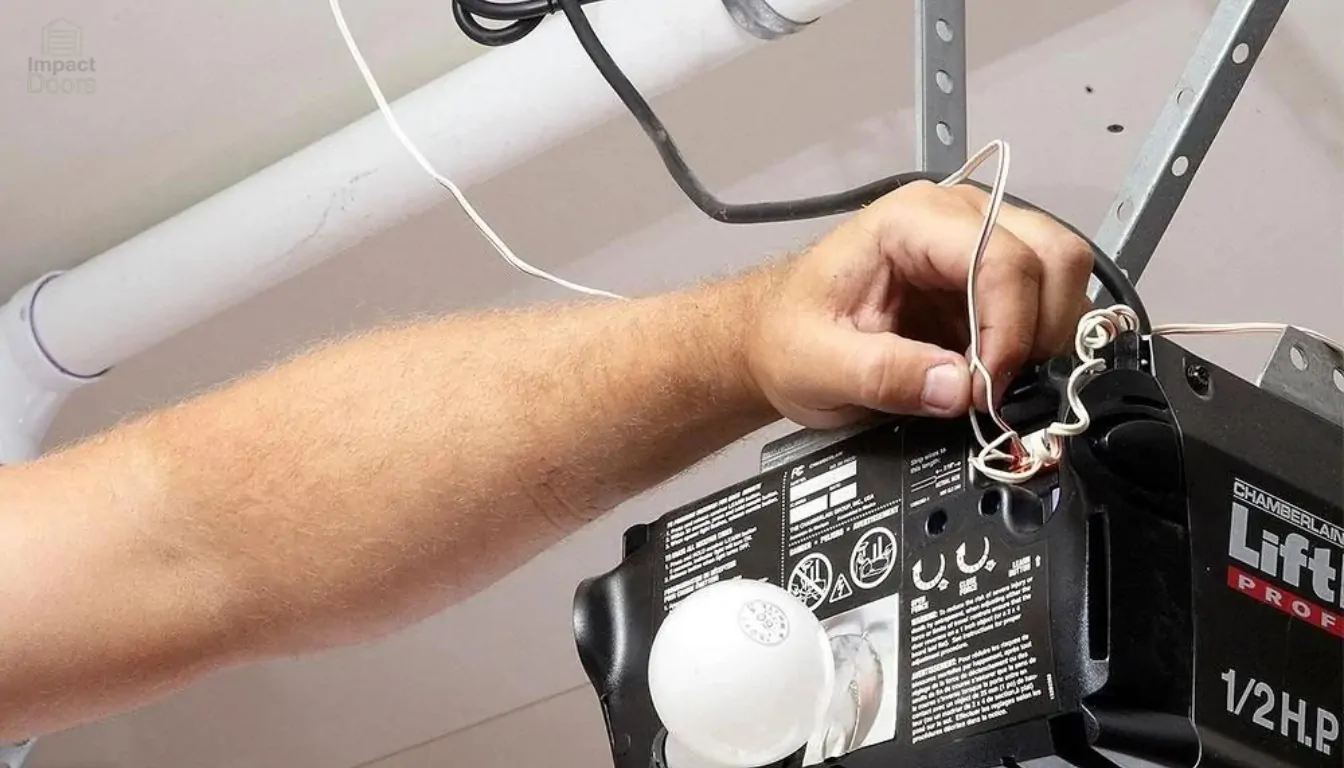
The limits on your garage door motor tell it exactly where to stop when opening and closing. If they are set wrong, the door can stop short and leave a gap, slam into the floor, reverse unexpectedly or overrun the top of the track. Here is how limit setting works and how to check it properly.
What Are Garage Door Limits?
Every opener has two travel limits: the open limit (how far up the door travels) and the close limit (where the door stops at the floor). Most openers also have force or sensitivity settings that control how much resistance the motor accepts before it stops and reverses. Limits and force work together, so they should always be checked together.
Before You Start
- Make sure the door is balanced. Pull the emergency release cord, lift the door by hand to about halfway: it should stay in place. If it falls or shoots up, the springs need attention. Do not use limit settings to compensate for a spring problem.
- Clear and clean the tracks. Remove obstructions and debris.
- Check the safety sensors are aligned and their lights are on.
- Re-engage the opener and make sure the door is connected to the motor carriage.
- Find your motor brand and model. Programming buttons and sequences differ between brands, so always follow the manual for your model.
1. Enter Setup or Programming Mode
Most modern openers use buttons on the motor head (often marked Set, Program, or Up/Down arrows), or a built-in display. Older openers use mechanical limit screws or plastic cams instead. Enter the programming mode as described in your opener's manual.
2. Set the Open Limit
Use the Up control to raise the door until it is fully open, with a small clearance below the header or track stop. The door should never be driven hard against the stop. Save the position (confirm button or sequence for your model). On mechanical-limit openers, turn the open limit screw in small increments, following the direction arrows on the motor, and test after each adjustment.
3. Set the Close Limit
Use the Down control to lower the door until the bottom seal sits snug on the floor. It should seal firmly without being crushed or squashed. If the door stops short, you will leave a gap; if it pushes too hard, it will strain the motor and may reverse when it hits the floor. Save the position.
4. Run a Full Cycle
Exit programming mode and run the door fully open and fully closed using the wall button and a remote. The door should stop smoothly at both ends and run without jerking.
5. Check the Force Setting
Force should be just enough to move the door smoothly. Too high is unsafe; too low causes the door to stop or reverse during normal travel. Adjust in small steps following the manual.
6. Test the Auto-Reverse
Place a solid object (such as a roll of paper towel or a piece of timber) on the floor under the door and close it. The door must stop and reverse as soon as it touches the object. If it does not, stop using the door and book a service.
7. Test the Safety Sensors
While the door is closing, wave an object through the sensor beam. The door must stop and reverse immediately.
Common Limit Problems
- Door stops short of the floor / gap at the bottom: close limit set too high. Adjust the close limit down slightly.
- Door reverses when it reaches the floor: close limit too low or force too sensitive, or the door is out of balance.
- Door does not fully open: open limit set too low, or the door is catching on something in the track.
- Motor runs but the door does not move: the door may be disconnected from the carriage, or there is a mechanical failure.
- Limits keep changing: usually worn components, loose fittings or a motor that needs servicing.
Safety Warning
Never adjust springs, cables or lifting brackets yourself. They are under extreme tension and can cause serious injury. Limit and force settings are the only adjustments that should be attempted by a homeowner, and only if the door is balanced and moves freely. If in doubt, call a professional.
What to Do Next
If your limits will not hold, the door is not balanced, or the auto-reverse test fails, stop using the door and have it inspected. Our technicians can set and test limits and force on all major motor brands. Contact our team to book a service.